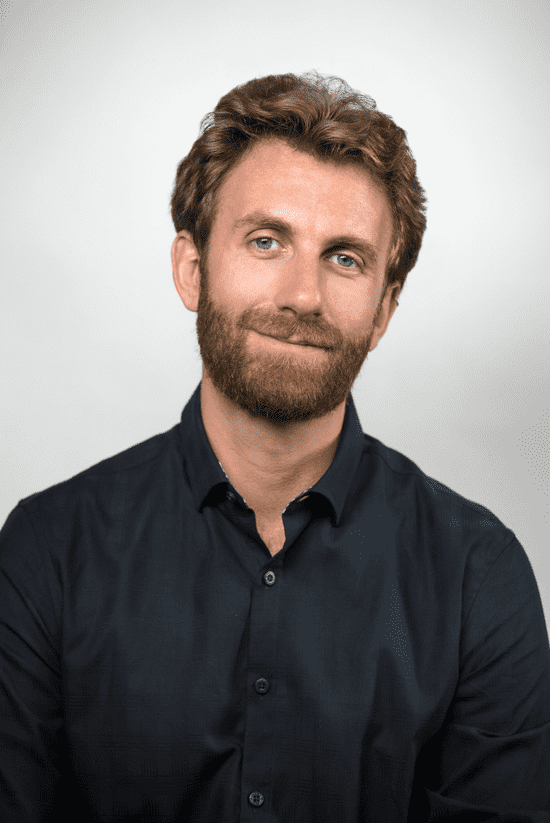
Rotem Petranker, Ph.D.
- Director, Canadian Centre for Psychedelic Science
- Co-founder, Psychedelic Studies Research Program, University of Toronto
- Post-Doctoral Fellow, Department of Surgery, McMaster University
Rigorous, transparent research on psychedelics, and on the attention, creativity and emotion regulation that shape a good life.
The first randomized clinical trial of microdosing psilocybin for major depression
Eight weeks of repeated low doses were safe and well tolerated, but did not produce a meaningful change in mood or symptom severity. A result that matters precisely because it was tested properly.
Research, and the places it happens
Research
Rotem’s main projects focus on the intersection between attention, creativity and affective regulation. He is interested in psychedelics as a means to probe these constructs.
Publications →
Canadian Centre for Psychedelic Science
Rotem co-founded the Centre in 2019 with the aim of offering transparent and rigorous research and consulting. The Centre ran the world’s first clinical trial of microdosing psilocybin for depression.
psychedelicscience.ca →
Psychedelic Studies Research Program
Rotem co-founded the Program at the University of Toronto with Dr. Norman Farb and Thomas Anderson, creating a hub for psychedelics research.
About the PSRP →Publications
Rotem graduated with a BSc in psychology from the University of Toronto and an MA in social psychology from York University, where his thesis modelled the contribution of affective regulation to the relationship between mindfulness and sustained attention. He earned his PhD from McMaster University with Dr. David Shore; his dissertation was a double-blind, placebo-controlled psilocybin study.
- 2026NewSafety and efficacy of microdosing psilocybin over 8 weeks for major depressive disorder: a randomized clinical trial (preprint, under review)
- 2026Microdosing psilocybin for major depressive disorder: study protocol for a phase II double-blind placebo-controlled randomised partial crossover trial (BJPsych Open)
- 2024Global trends in psychedelic microdosing: demographics, substance testing behavior, and patterns of use
- 2024Keeping the promise: a critique of the current state of microdosing research
- 2022Set and setting in microdosing: an oft-overlooked principle
- 2022Manifest your desires: psychedelics and the self-help industry
- 2022Microdosing as a response to the meaning crisis: a qualitative analysis
- 2021Sitting with it: an investigation of the relationship between trait mindfulness and sustained attention
- 2021Social interaction context shapes emotion recognition through body language, not facial expressions
- 2021The metronome response task for measuring mind wandering: replication attempt and extension of three studies by Seli et al.
- 2020Psychedelic research and the need for transparency: polishing Alice’s looking glass
- 2020Microdosing psychedelics: subjective benefits and challenges, substance testing behavior, and the relevance of intention
- 2020Microdosing psychedelics: demographics, practices, and psychiatric comorbidities
- 2019Psychedelic microdosing benefits and challenges: an empirical codebook
- 2019Semantic and affective representations of valence: prediction of autonomic and facial responses from feelings-focused and knowledge-focused self-reports
- 2018Microdosing psychedelics: personality, mental health, and creativity differences in microdosers
- 2018Sitting with it: an investigation of the relationship between mindfulness and boredom
- 2017Is fear in your head? A comparison of instructed and real-life expressions of emotion in the face and body
- 2017Demography of microdosing community survey
Talks, interviews and press


Short clips from Rotem’s interview with Psychedelic Conversations, recorded at Psychedelic Science 2025 in Denver.
- Trip or treatment? The science, myths and history of psychedelics
- Microdosing for depression and the limits of what science can know
- Microdosing psilocybin: truth vs hype
- Placebo, open science and microdosing
- The psychedelic renaissance and the importance of open science
- Psychedelic research with Rotem Petranker
- The state of psychedelic research
- Does microdosing LSD help you focus and improve your mood?
- Is microdosing LSD a solution to the ‘crisis of meaning’ in modern life?
- ‘Microdosers’ of LSD and magic mushrooms are wiser and more creative
- Reshaping minds
- Does microdosing magic mushrooms help people with mental health issues? Science is trying to find out
- Can magic mushrooms treat depression? How a Canadian microdosing trial aims to find out
- Psychedelics such as magic mushrooms are having a moment. Can science keep up?
- The magic of mushrooms
- People who microdose psychedelic drugs report that the benefits greatly outweigh the drawbacks
- To prevent corruption, psychedelics researchers call for ethics guidelines
- Meet the woman who wants to sell psychedelic drugs to scientists
- ‘Microdosers’ of psychedelics report improved mood, focus and creativity
- Improved mood, focus reported by microdosers, UTM study shows
- The Canadian revival of psychedelic drug research
- Benefits and challenges of psychedelic microdosing, as reported by microdosers
- LSD, mushrooms and the brain: we discovered microdosing could boost creativity and wisdom
- Psychedelic science: new Canadian study sheds light on ‘microdosing’ hallucinogenic drugs
Pre-registered, in the open
Rotem pre-registers his studies: the hypotheses and analysis plan are published before the data come in, so the results can’t be quietly reshaped afterwards. His advice for anyone reading psychedelic research is simple: look for what’s pre-registered. His plans, materials and data are public on the Open Science Framework.
Current projects
- 2026Survey on social attitudes towards psychedelicsPre-registered March 2026
- 2025Microdosing trial: mystical experience, adverse events and blindingFollow-up analysis, pre-registered May 2025
- 2025Microdosing trial: mindfulness, body awareness and painFollow-up analysis, pre-registered May 2025
- 2025Microdosing trial: attention and mind wanderingFollow-up analysis, pre-registered May 2025
- 2024Ketamine surveyPre-registered December 2024
Pre-registrations
- Microdosing psilocybin for depression: the clinical trial2024
- Microdosing survey 20232024
- The bright and dark side of psychedelics2022
- Psychological flexibility and personality2021
- Creativity over time2019
- Global Drug Survey2019
- Demography of the microdosing community2017
Free preprints
- Microdosing psilocybin for major depressive disorder: study protocolPsyArXiv · 2025
- Manifest your desires: psychedelics and the self-help industryPsyArXiv · 2022
- Psychedelic research and the need for transparency: polishing Alice’s looking glassPsyArXiv · 2020
- Microdosing as a response to the meaning crisisPsyArXiv · 2020
- Microdosing psychedelics: personality, mental health and creativity differences in microdosersPsyArXiv · 2018
Speaking & consulting
Public speaking
Rotem has given talks in a wide variety of venues to audiences ranging from laypeople to experts, online and in person, to classes, businesses and conferences. Talks can be tailored to your audience, covering the potential benefits and drawbacks of psychedelics and microdosing. Recent: Psychedelic Science 2025 in Denver, where he presented the first results of his microdosing trial, and ICPR 2024, the Interdisciplinary Conference on Psychedelic Research.
Invite Rotem to speakScientific consulting
A foremost expert on the science of microdosing, Rotem helps organisations make their work more science-based, from study design and evidence review to keeping claims honest in a field that badly needs it.
Become partnersAt a glance
- Born
- Haifa, Israel
- Based
- Toronto, Canada
- PhD
- McMaster University
- MA
- York University
- BSc
- University of Toronto
- Off duty
- Walking his dog Stella, marathon training, meditation, travel
From physics to the Good Life
Rotem (Roe-tem) was born in Haifa, Israel, and emigrated to Toronto at the age of 24. He started his academic career as a physics major in the pursuit of the fundamental principles of reality, but quickly realized that our ability to know the universe is limited more by our minds than anything else. He started doing research with various international collaborators as of the second year of his undergraduate degree, and hasn’t stopped since.
Rotem’s interests have since become more focused on learning how to live a good life, and how to teach these principles. He believes that being able to weather life’s storms is an important part of the Good Life, but being creative and attentive to the process are equally important parts. Rotem is particularly excited about psychedelics as a means to transcend normal conscious experience in a way that helps individuals live the Good Life.
While doing research is important, Rotem feels strongly that doing research the right way is necessary. Rotem is a strong proponent of Open Science, and has published about the topic in both popular and academic media outlets.
Rotem spends much of his free time walking his dog Stella, training for marathons, meditating, and travelling.
Get in touch
For speaking, consulting, media requests, or anything else, email is the best way to reach Rotem directly.
rotem@petranker.comElsewhere